
Plumbing System Cleaning Services
Thorough Cleaning of
Water Storage Tanks, Drainpipes,
and Drainage Tanks
From Cleaning to Water Quality Testing and Reporting,
We Provide End-to-End Support for Building Sanitation Management.
Cleaning plumbing systems is an important form of maintenance that helps prevent failures and
accidents and protects the asset value of the building.
AMCON INC. has provided maintenance of plumbing systems for condominiums
and buildings in the Tokyo metropolitan area for more than 40 years.
We provide one-stop support, from cleaning drainpipes, drainage tanks,
and water storage tanks to renovation proposals and maintenance.
Do You Have Any of These Concerns?
For example...
Drainpipes clog easily or produce odors even though they are cleaned regularly
For example...
You are concerned about the cleaning status or water quality of the water storage tank
For example...
Managing cleaning, inspections, construction work, and water quality testing is complicated because you use multiple contractors

Reason Why Choose AMCON?
Reason01
We Address the Root Causes
of Clogging and Odors
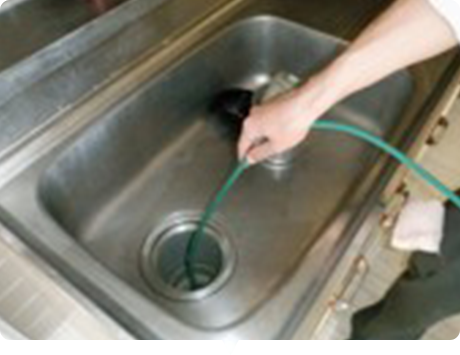
Drainpipe clogging and odors cannot always be resolved with surface-level cleaning alone. At AMCON, we check the buildup of dirt and the condition of the pipes, then use the appropriate cleaning method for the cause. Leave stubborn clogs to us. For one year after cleaning, we provide warranty support for drainage problems that occur under normal use.
Reason02

One-Stop Support Through Water Quality Testing, with Photo Reports for Clear Visualization
AMCON is a legally registered inspection institution for drinking water quality testing in buildings. Because we can handle water quality testing after water storage tank cleaning in-house without outsourcing, we provide fast support from cleaning to testing and reporting.
Cleaning results are reported in an easy-to-understand photo report, clearly visualizing the condition before and after cleaning. The report can also be used as-is as explanatory material for management associations.
Reason03

Single Point of Contact and Reliable Support from Trained Staff
AMCON serves as a single point of contact and provides one-stop support for cleaning, inspections, construction work, and water quality testing. This eliminates the need to coordinate with multiple contractors and reduces the management burden on property management companies and management associations.
We carry out cleaning work mainly with our own staff, who have received safety education and business etiquette training, in cooperation with partner companies. Even when work requires entry into private units, we thoroughly handle protective covering, post-work cleaning, and careful explanations.
Service Cleaning Services for Plumbing Systems
AMCON provides a range of cleaning services for plumbing systems to protect the sanitary environment of condominiums and buildings.
We regularly clean drainpipes, drainage tanks, water storage tanks, and other equipment to prevent clogging, odors,
and equipment trouble before they occur.
Our Services
ContentsService Details
-
Drinking Water Storage
Tank Cleaning -
Graywater Drainpipe
Cleaning - Drainage Tank Cleaning
- Pest Control
Service 01 Drinking Water Storage Tank Cleaning
A water storage tank with an effective capacity of more than 10 cubic meters that supplies drinking water to a building is classified as a Building Water Tank System, and Japan’s Waterworks Law requires regular cleaning and water quality testing at least once a year. In addition, local government ordinances in Japan may require self-inspection results to be reported to the public health center.
Water storage tanks with an effective capacity of less than 10 cubic meters (small-scale water storage tank water supply systems) may also be required by local government ordinances in Japan to be managed in accordance with the standards for Building Water Tank Systems.
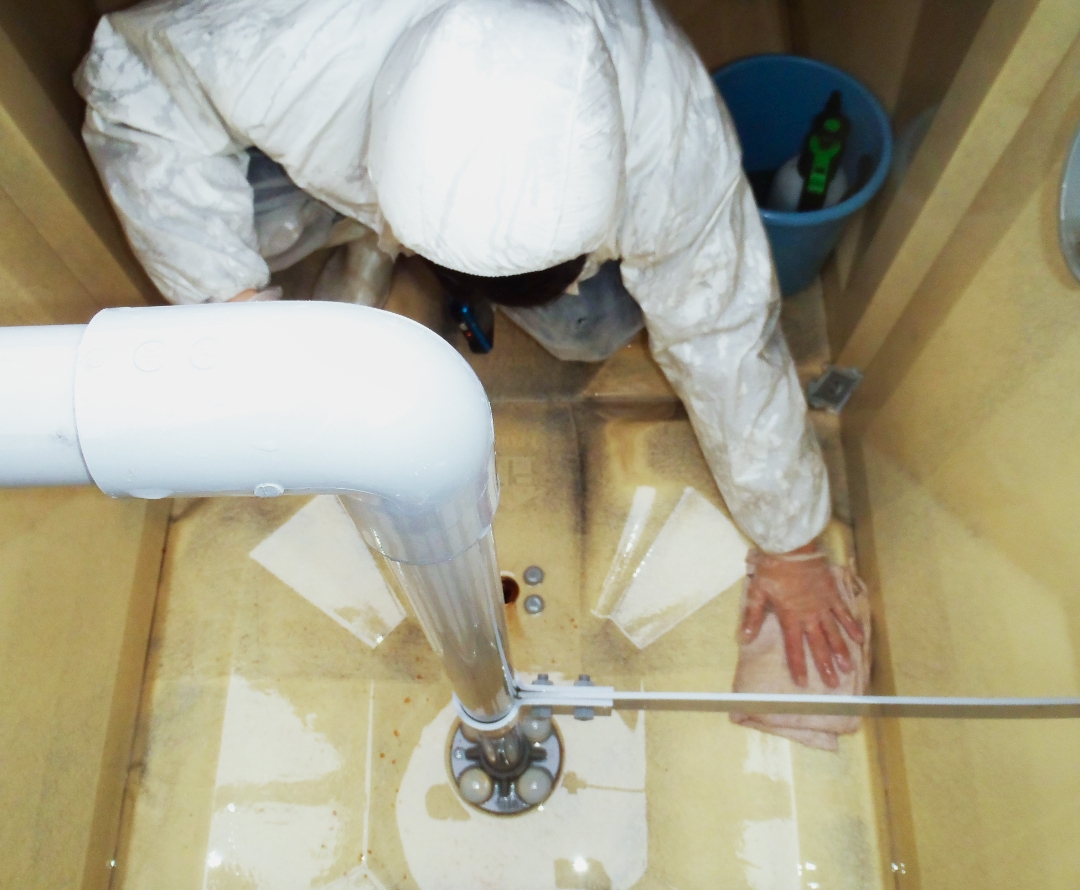
In addition to high-pressure cleaning and disinfection inside the tank, AMCON also cleans the exterior walls within the work fee. By cleaning every corner, we can detect abnormal areas or matters of concern early and provide appropriate proposals and responses.
Before
After
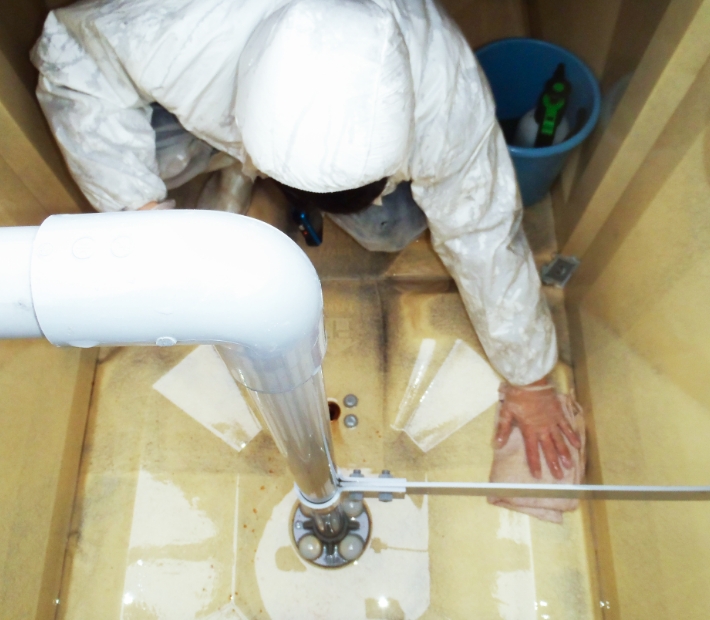
Cleaning Work Details
- High-pressure cleaning and disinfection inside the water storage tank
- Water quality testing after cleaning
(optional / one-stop support available from AMCON) - Equipment inspection of pumps, alarm panels, and other devices
- Residual chlorine measurement after cleaning
- Cleaning the exterior of the tank and checking for deterioration or damage
Feature Service Features
Exterior wall cleaning is included in the work fee, not only internal cleaning
One-stop in-house support through water quality testing is available (registered institution for drinking water quality testing in buildings)
Support from renovation proposals to construction work for abnormal areas
Why Water Storage Tank Cleaning Is Necessary Even If It Looks Clean
Even when no dirt is visible inside a water storage tank, the following problems may occur.
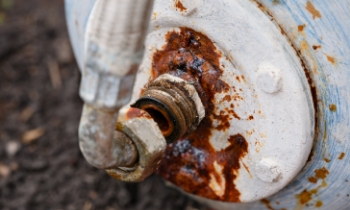
Rust and corrosion of metal parts
Metal parts such as bolts inside the tank are continuously exposed to chlorinated tap water, which can cause rust and lead to dirt, bacteria, and foreign matter contamination.
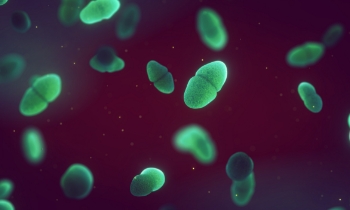
Biofilm adhesion
Microorganisms such as bacteria adhere to the tank walls and form an invisible film.
Decrease in residual chlorine
If cleaning is neglected, the residual chlorine concentration inside the tank may decrease and sanitary conditions may worsen.
Visual cleanliness and water quality do not necessarily match. It is important to ensure the safety of drinking water through regular cleaning and water quality testing.
How Often Should Water Storage Tanks Be Cleaned?
As noted above, requirements vary depending on effective capacity. Under Japan’s Waterworks Law, regular cleaning is required at least once a year, and local government ordinances in Japan generally also require regular cleaning at least once a year.
Leave Water Storage Tank Inspections and Water Quality Testing to Us
Water storage tank inspection is also required once a year under Japan’s Waterworks Law.
Water storage tanks with an effective capacity of more than 10 cubic meters also require a periodic inspection once a year.
We inspect the inside and outside of the water storage tank, insect-proof screens on vent pipes and other areas, manhole sealing, residual chlorine, and other items.
One-stop support is also available for water quality testing.
We can also handle water quality testing after refilling the water storage tank following cleaning, as well as Building Water Tank System Inspection stipulated under Japan’s Waterworks Law.
Service 02 Graywater Drainpipe Cleaning
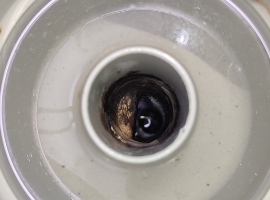
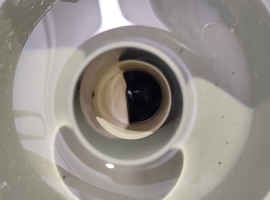
Drainpipes clog, odors occur, backflow or water leakage happens... To prevent such problems before they occur, we recommend periodic cleaning once a year. Depending on the age of the building and how it is used, accumulated dirt can easily develop and may lead to serious problems or pipe deterioration.
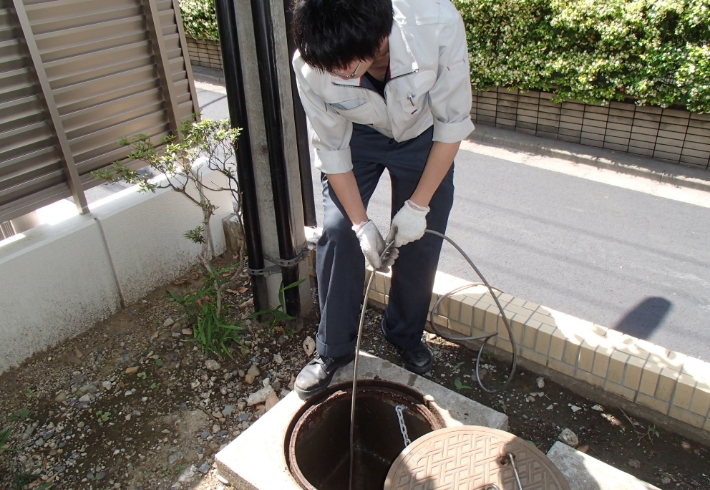
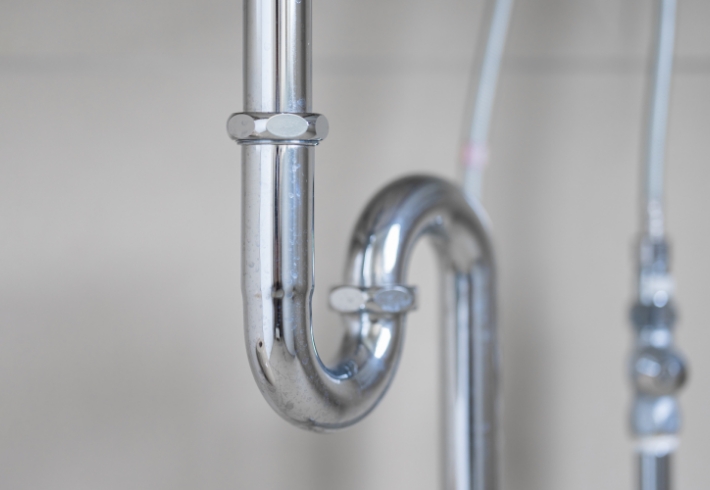
From private units to common areas, we thoroughly remove grease and dirt using special high-pressure cleaning. If an unpleasant odor comes from a drain, it is often caused by a loss of water seal in the trap, so we also check and provide guidance during cleaning.
Before
After
Kitchen drain
Areas Covered by Cleaning Work
- Private units: kitchen, bathroom drain, washbasin, washing machine drain
- Common areas (inside the building): vertical pipes, horizontal main pipes
- Common areas (outdoors): buried drainpipes
Feature Service Features
One-year warranty for drainage problems under normal use after cleaning
Thorough protective covering, cleaning, and courteous service even for work inside private units
Why Graywater Drainpipe Cleaning Is Necessary
In condominiums and buildings, grease and dirt gradually accumulate in drainpipes through everyday use.
The following symptoms may indicate that dirt has accumulated inside the drainpipes.
Watch Out for These Symptoms
- Drainage is slow or takes time
- Odors come from the drain
- Backflow or water leakage occurs
- Gurgling or other unusual sounds occur
- Insects such as moth flies appear
Main Causes of Clogging and Odors
Drainpipe clogging and odors are caused by the accumulation of dirt that flows in during daily life.
| Location | Main Causes of Dirt |
|---|---|
| Kitchen | Grease, food scraps, detergent residue |
| Bathroom | Soap scum, sebum, hair |
| Washroom | Soap scum, hair, cosmetics |
| Washing machine area | Fiber lint, detergent residue |
Over time, this dirt hardens and can no longer be removed by normal water flow. If left untreated, it can accelerate corrosion
inside the pipes and shorten their service life.
Point Is Drainpipe Cleaning Legally Required for Condominiums and Buildings?
For drainpipe cleaning in condominiums, no legal cleaning obligation is prescribed for ordinary apartment buildings. However, for specified buildings subject to Japan’s Building Sanitation Law (Act on Maintenance of Sanitation in Buildings), drainage system cleaning is required once every six months.
Regardless of whether there is a legal obligation, drainpipe clogging and odors are problems directly connected to residents’ daily lives. In many cases, management associations and property management companies carry out periodic cleaning about once a year, considering usage conditions and the age of the building. Regular cleaning helps prevent sudden problems and can also extend the service life of the pipes.
Service 03 Drainage Tank Cleaning (Sewage Tanks, Graywater Tanks, Grease Traps, etc.)
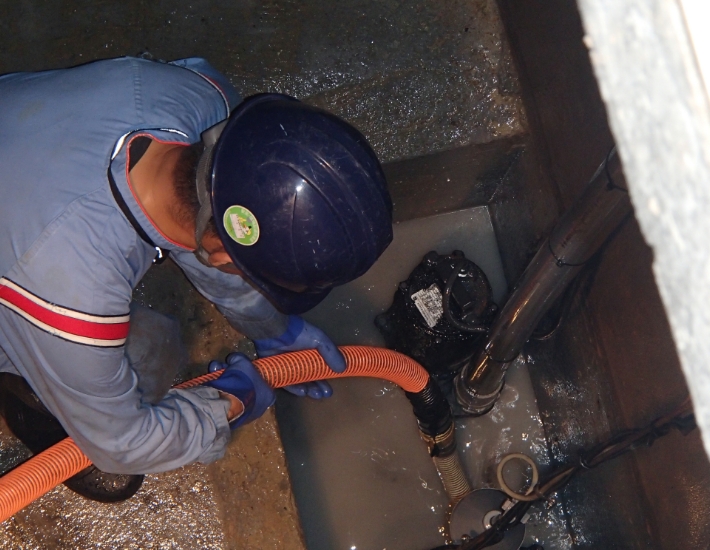
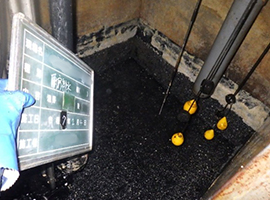
A drainage tank is equipment that stores sewage and other wastewater. Regular cleaning helps prevent odors, pest outbreaks, and malfunction or failure of auxiliary equipment such as sensors and pumps.
Under Japan’s Building Sanitation Law, drainage tanks in specified buildings are required to be cleaned at least once every six months (at least twice a year). Depending on the scale and usage conditions of the equipment, we may recommend more frequent cleaning.
Drainage tanks are often installed in building basements, and odors or pest outbreaks can significantly affect building users and store operations. Failure of drainage equipment such as pumps may also lead to wastewater discharge accidents.
Drainage tank
Before
After
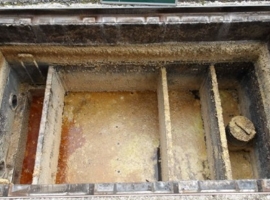
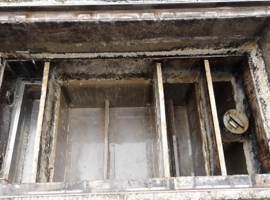
Grease trap
Before
After
Equipment Covered by Cleaning
- Sewage tanks
- Graywater tanks
- Spring water tanks and rainwater tanks
- Grease traps
In buildings with restaurants or cafeterias, regular grease trap cleaning is essential.
It prevents the buildup of grease and food residues and reduces the burden on drainpipes.
- Disposer wastewater treatment tanks
Properties with disposers require more advanced maintenance than ordinary drainpipes.
Staff with specialized knowledge properly manage the entire drainage system.
Feature Service Features
Support from sludge suction using special vehicles to internal cleaning
Auxiliary equipment such as sensors and pumps is also checked during cleaning
Consideration is given to preventing odors and pest outbreaks
Service 04 Pest Control
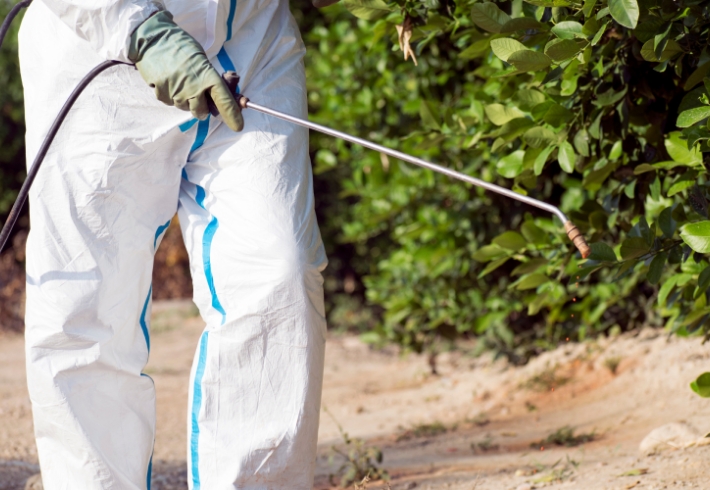
Areas around drainage tanks and drainpipes are prone to becoming breeding sources for moth flies, cockroaches, rats, and other pests. To protect the sanitary environment of buildings, we also provide pest control using chemicals based on specialized knowledge.
Cases Cleaning Case Studies
Case 01
Early Detection of a Water Supply Pump Problem
During Periodic Water Storage Tank Cleaning
During a water supply system inspection conducted at the time of cleaning, we discovered damage to the diaphragm inside the pressure tank of a water supply pump. Because leaving it untreated could create a future water outage risk, we promptly reported the issue to the property management company and provided one-stop support through replacement work.
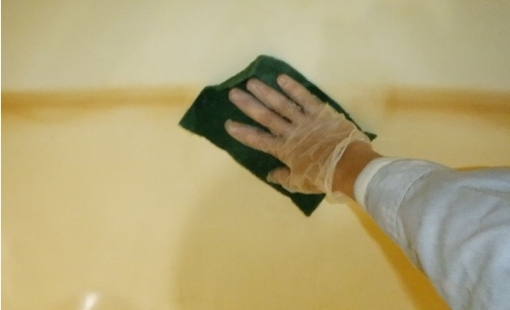
Water Storage Tank Cleaning in Progress
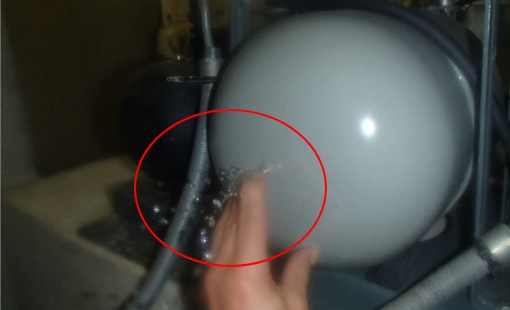
Damaged Diaphragm
Case 02
Improvement of Drainage Problems
That Recurred Less Than One Year After Cleaning
After cleaning by another company, the drainage flow worsened again within less than one year. Careful high-pressure cleaning improved the drainage problem, and the customer commented that the work was “thoroughly cleaned down to every corner.”
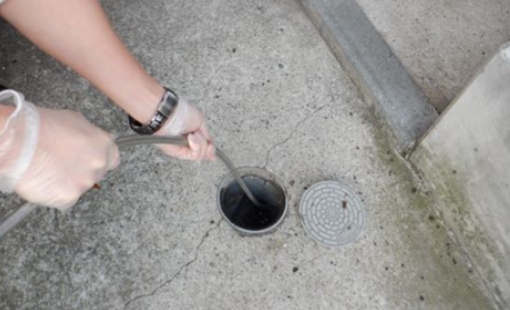
Graywater Drainage Pipe Cleaning - Customer Testimonial
Flow Flow from Consultation to Completion of Work
-
01
 Free Consultation and Estimate
 -
Consultations and estimates are free. Please feel free to contact us.
-
02
 Free On-Site Confirmation and Survey
 -
For water storage tank cleaning, whether water must be shut off depends on the equipment structure, so we conduct an on-site confirmation as needed.
-
03
 Proposal of the Optimal Cleaning Plan
 -
We propose the optimal cleaning method based on the condition of the building.
-
04
 Scheduling and Notification
 -
We coordinate the work schedule and prepare notices for residents and building users. At your request, we can also post or distribute the notices for a fee.
-
05
 Cleaning Work
 -
We thoroughly apply protective covering and carry out the work quickly while maintaining proper manners.
-
06
 Report Submission and Follow-Up
 -
We submit a photo report. If any abnormal areas are found, we also explain the situation and propose renovation work.

- Tokyo — All Areas
-
All 23 Wards
Chiyoda Ward, Chuo Ward, Minato Ward, Shinjuku Ward, Bunkyo Ward, Taito Ward, Sumida Ward, Koto Ward, Shinagawa Ward, Meguro Ward, Ota Ward, Setagaya Ward, Shibuya Ward, Nakano Ward, Suginami Ward, Toshima Ward, Kita Ward, Arakawa Ward, Itabashi Ward, Nerima Ward, Adachi Ward, Katsushika Ward, Edogawa Ward
Other Areas
Machida City, Komae City, Mitaka City, Chofu City, Fuchu City, Tachikawa City, Inagi City, Tama City, Hino City, Kunitachi City, Kokubunji City, Musashino City, Nishitokyo City, Koganei City, Kodaira City, Higashikurume City, Kiyose City, Higashimurayama City, Higashiyamato City, Musashimurayama City, Akishima City, Fussa City, Hamura City, Akiruno City, Hachioji City, Ome City, Nishitama District
- Kanagawa Prefecture — All Areas
-
All Yokohama Wards
Tsurumi Ward, Kanagawa Ward, Nishi Ward, Naka Ward, Minami Ward, Konan Ward, Hodogaya Ward, Asahi Ward, Isogo Ward, Kanazawa Ward, Kohoku Ward, Midori Ward, Aoba Ward, Tsuzuki Ward, Totsuka Ward, Sakae Ward, Izumi Ward, Seya Ward
All Kawasaki Wards
Kawasaki Ward, Saiwai Ward, Nakahara Ward, Takatsu Ward, Miyamae Ward, Tama Ward, Asao Ward
Other Areas
Yokosuka City, Hiratsuka City, Kamakura City, Fujisawa City, Odawara City, Chigasaki City, Zushi City, Miura City, Hadano City, Atsugi City, Yamato City, Isehara City, Ebina City, Zama City, Minamiashigara City, Ayase City, Sagamihara City, Miura District, Koza District, Naka District, Ashigarakami District, Ashigarashimo District, Aiko District
- Chiba Prefecture
-
All Chiba City Wards
Chuo Ward, Hanamigawa Ward, Inage Ward, Wakaba Ward, Midori Ward, Mihama Ward
Other Areas
Urayasu City, Ichikawa City, Narashino City, Funabashi City, Kamagaya City, Matsudo City, Nagareyama City, Kashiwa City
- Saitama Prefecture — All Areas
-
All Saitama City Wards
Nishi Ward, Kita Ward, Omiya Ward, Minuma Ward, Chuo Ward, Sakura Ward, Urawa Ward, Minami Ward, Midori Ward, Iwatsuki Ward
Other Areas
Toda City, Warabi City, Kawaguchi City, Soka City, Yashio City, Misato City, Yoshikawa City, Koshigaya City, Kasukabe City, Wako City, Niiza City, Asaka City, Shiki City, Tokorozawa City, Fujimi City, Fujimino City, Iruma City, Sayama City, Kawagoe City, Ageo City, Okegawa City, Kitamoto City, Konosu City, Kumagaya City, Fukaya City, Honjo City, Gyoda City, Kazo City, Hanyu City, Kuki City, Hasuda City, Shiraoka City, Satte City, Hanno City, Hidaka City, Sakado City, Tsurugashima City, Higashimatsuyama City, Chichibu City, Iruma District, Hiki District, Chichibu District, Kodama District, Osato District, Minamisaitama District, Kitakatsushika District
- Yamanashi Prefecture — All Areas
-
Kofu City, Fujiyoshida City, Tsuru City, Yamanashi City, Otsuki City, Nirasaki City, Minami-Alps City, Hokuto City, Kai City, Fuefuki City, Uenohara City, Koshu City, Chuo City, Nishiyatsushiro District, Minamikoma District, Nakakoma District, Minamitsuru District, Kitatsuru District
- Shizuoka Prefecture
-
Gotemba City
Please feel free to contact us for details about service areas.
FAQ Frequently Asked Questions
- Q Is it necessary to enter each unit when cleaning drainpipes?
- A Yes. When cleaning drainpipes in private areas, entry into each unit is required. We can also prepare notices for residents and handle distribution work in advance.
- Q Is drainpipe cleaning available on Saturdays and Sundays?
- A Yes. We can also provide service on Saturdays and Sundays.
- Q Will water be shut off during water storage tank cleaning? How long does it take?
- A Yes. Cleaning can be performed without shutting off water for a one-tank, two-compartment water storage tank, but water will be shut off during cleaning for a one-tank, single-compartment water storage tank. The duration of the water outage depends on the size of the water storage tank, but we conduct an on-site confirmation in advance and support notification to residents.
- Q Can we request work at night or early in the morning?
- A Yes. For buildings with commercial facilities or stores where daytime work is difficult, please consult us about night or early-morning work schedules.