
About Types of Plumbing Systems and Maintenance Points
- TOP
- Types of Plumbing Systems and Maintenance Points
- Types of Plumbing Systems and Their Respective Roles
- Signs of Deterioration and Abnormalities That Should Not Be Overlooked
- Maintenance Inspection Points: Water Supply System Section
- Maintenance Inspection Points: Drainage and Venting System Section
- Timing and Criteria for Equipment Renewal
- Systematic Maintenance and Management Protects Facility Asset Value
- Service List
Types of Plumbing Systems and Maintenance Points | Basic Knowledge Facility Managers Should Know
Plumbing systems in buildings, apartment buildings, commercial facilities, and similar properties are usually located out of sight, so they are often not noticed until a problem occurs. However, once a problem occurs, it can have a major impact on the entire building, including leakage damage, water outages, and odors. Health hazards caused by contamination of receiving water tanks and flooding incidents caused by clogged drainpipes not only undermine the trust of residents and users but also directly lead to a decline in asset value.
The three key points in managing plumbing systems are: (1) maintaining water quality, (2) ensuring stable equipment operation, and (3) preventing clogs and deterioration. By managing these points continuously, sudden problems and costly repairs can be prevented. This article explains the types, roles, and maintenance points of these systems in an easy-to-understand way.
Index
- Types of Plumbing Systems and Their Respective Roles
- Signs of Deterioration and Abnormalities That Should Not Be Overlooked
- Maintenance Inspection Points: Water Supply System Section
- Maintenance Inspection Points: Drainage and Venting System Section
- Timing and Criteria for Equipment Renewal
- Systematic Maintenance and Management Protects Facility Asset Value
- Service List
Types of Plumbing Systems and Their Respective Roles
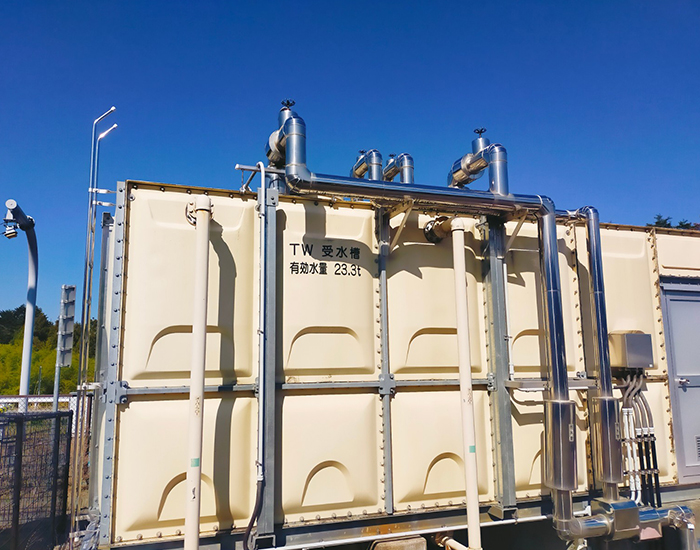
Plumbing systems are classified into water supply, drainage, venting, and related equipment. Because each type has different structures and signs of deterioration, understanding the characteristics of each one helps with the early detection of problems.
Water Supply Systems
These systems deliver clean water into the building. In many buildings, a method is used in which water is first stored in receiving water tanks and elevated water tanks and then sent to each floor by pressure water supply pumps. In recent years, more apartment buildings have adopted direct booster water supply systems and direct pressure water supply systems, and the management points vary depending on the water supply method.
Drainage Systems
These systems discharge used water outside the building. They include drainpipes, manholes, grease traps (commonly used in food-service facilities and factories), and groundwater sumps (building pits). Oil, grease, and debris tend to accumulate, and insufficient cleaning can cause clogs and odors.
Venting Systems
These systems, such as vent pipes and vent valves, allow drainage to flow smoothly. If venting is insufficient, drainage flow may become poor, and the trap seal (water inside the drain trap) may be lost, causing odors and pest intrusion.
Other Related Equipment
Hot water supply systems are also closely related to plumbing systems. Depending on the building use, such as hospitals, factories, or commercial facilities, it is important to identify which equipment should be checked with particular attention.
Signs of Deterioration and Abnormalities That Should Not Be Overlooked
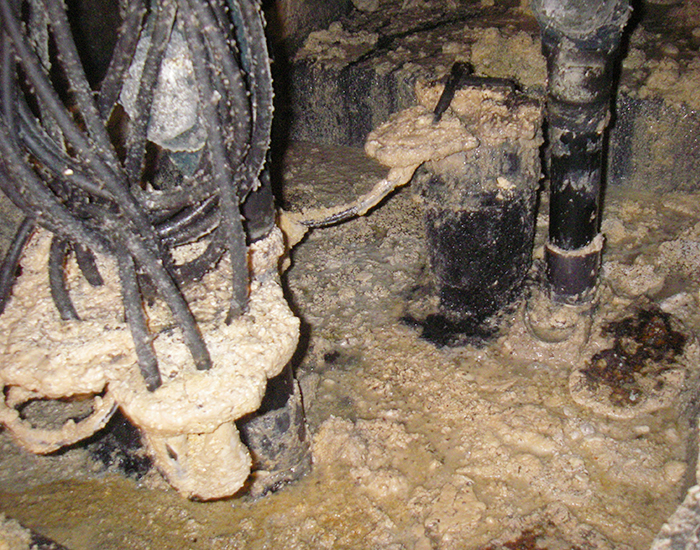
In many cases, plumbing systems show signs of abnormalities before they fail completely. If you notice any of the following symptoms, early action is important.
Signs in Water Supply Systems
- Water pressure becomes unstable
- Unusual noise or vibration comes from the pump
- Red water or turbidity appears
Signs in Drainage Systems
- Drainage flow is poor
- Gurgling noises occur
- Odors occur
- Rather than assuming that everything is fine because the system can still be used, we recommend checking it early.
Maintenance Inspection Points: Water Supply System Section
The two highest priorities for water supply systems are maintaining water quality and ensuring stable pump operation.
Check Items for Water Storage Tanks (Receiving Water Tanks and Elevated Water Tanks)
If the system qualifies as a Building Water Tank System under Japanese law, it must be cleaned at least once a year and undergo a statutory Building Water Tank System Inspection once within every year. The following items are also checked during inspections.
- Cracks, deterioration, algae or rust, and sediment inside the tank
- Cracks or rust on the exterior of the tank, and damage or defects in the manhole cover
- Condition of the overflow pipe, vent pipe, and insect screens
- Residual chlorine measurement (maintaining free residual chlorine of at least 0.1 mg/L at the water tap)
Records of inspection and cleaning can also serve as evidence that the management system is appropriate if a problem occurs. In buildings with a direct water supply system, regular inspections focus on booster pumps and backflow prevention valves.
▶ Related page:What Is Water Storage Tank Cleaning? Its Necessity, Work Details, Process, and Costs
Water Supply Pump Operation Management
The water supply pump can be described as the “heart” of the building. The main items to check during inspection are as follows.
- Presence or absence of unusual noise and vibration
- Consistency between rated/set values and actual measured values for pressure gauges, current, and voltage, as well as insulation resistance values, etc.
- Alarm history, operating frequency, and number of starts/stops of the control panel, etc.
- Water leakage from shaft seal sections (mechanical seals, etc.) and piping
In buildings that have aged, attention must be paid not only to the pump itself but also to corrosion at pipe connections.
Maintenance Inspection Points: Drainage and Venting System Section
The two important points are preventing clogs and implementing odor and pest control measures. Oil, grease, scale deposits, and rust inside drainpipes become harder the longer they are left, making them difficult to remove even by high-pressure cleaning. Taking a preventive maintenance approach, rather than responding only after drainage becomes impossible, ultimately leads to cost reductions.
Preventing Drainpipe Clogs
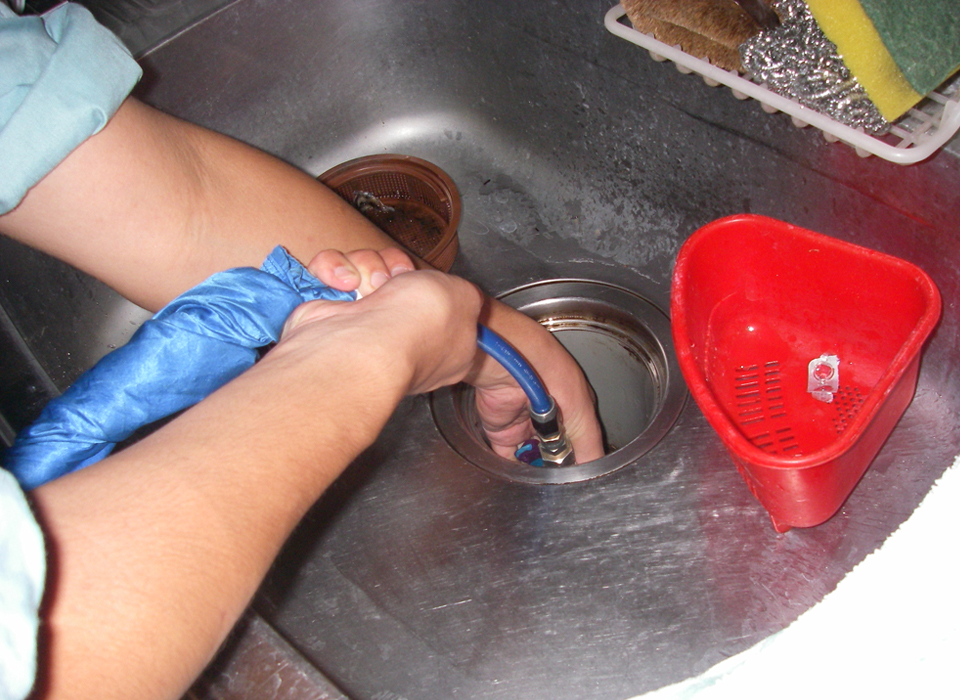
Regular high-pressure cleaning is one effective way to prevent drainpipe clogs. For buildings that qualify as specified buildings under Japan’s Building Sanitation Law, drainage-related equipment must be cleaned at least once every six months. On the other hand, because no clear regulation has been confirmed that specifically sets the frequency or method for periodic high-pressure cleaning of drainpipes themselves, it is important to carry it out systematically according to the building’s use and operating conditions.
For typical apartment buildings, cleaning about once every one to two years is often used as a guideline. However, in buildings with restaurant tenants, oil and grease accumulate quickly, so shorter cleaning cycles may be required. In addition, checking for clogged vent pipes and malfunctioning vent valves can help reduce the risk of poor drainage and odors.
▶ Related page:Prevent Water Problems in Apartment Buildings with Regular Drainpipe Cleaning
Management of Grease Traps and Drainage Pumps
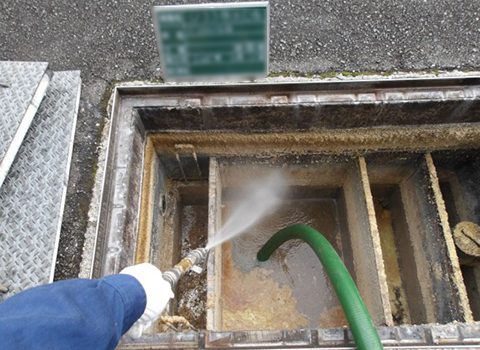
In buildings with food-service facilities or dining areas, cleaning and management of grease traps are especially important. Insufficient cleaning not only causes odors and pests but also accelerates the accumulation of oil and grease in downstream drainpipes. For drainage pumps, the normal operation of automatic alternating operation and deposits inside the tank are checked regularly.
▶ Related page:Grease Trap (Grease Interceptor): Mechanism and Cleaning Frequency Explained
Timing and Criteria for Equipment Renewal
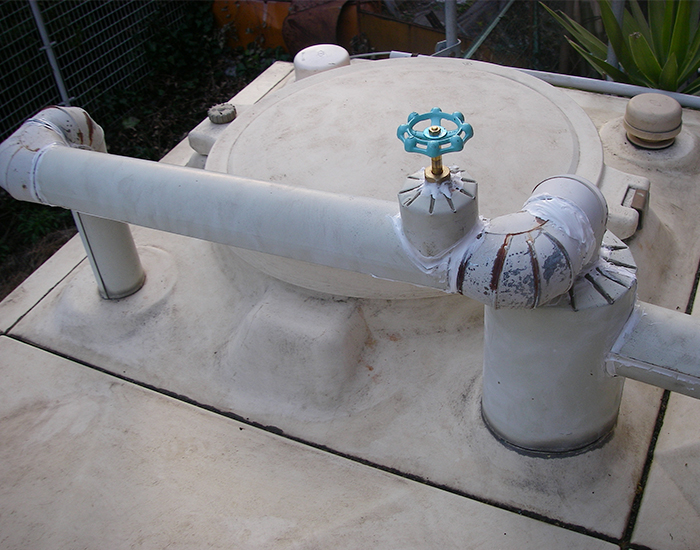
Because sudden emergency work is more expensive than planned work, systematic renewal based on a medium- to long-term repair plan is a wise approach. The following are representative renewal guidelines by equipment type. Since actual timing varies depending on the condition of deterioration and the usage environment, please make decisions together with regular inspections.
Water Storage Tank Renewal Guidelines
| Tank Type | Estimated Renewal Timing | Notes |
|---|---|---|
| Stainless steel | Approx. 25-30 years | Highly durable with a long service life |
| FRP (fiber-reinforced plastic) | Approx. 15-20 years | Susceptible to ultraviolet rays and age-related deterioration |
| RC construction (concrete) | Approx. 30-40 years | Interior waterproofing requires separate maintenance |
Water Supply Pipe Renewal Guidelines
| Pipe Type | Estimated Renewal Timing |
|---|---|
| Stainless steel pipe | Approx. 30 years |
| Polyethylene pipe (PEX pipe) | Approx. 30 years |
| Rigid polyvinyl chloride pipe (VP pipe) | Approx. 20-25 years |
| Impact-resistant polyvinyl chloride pipe (HIVP pipe) | Approx. 30 years |
| Polybutene pipe (PB pipe) | Approx. 30-40 years |
Drainpipe Renewal
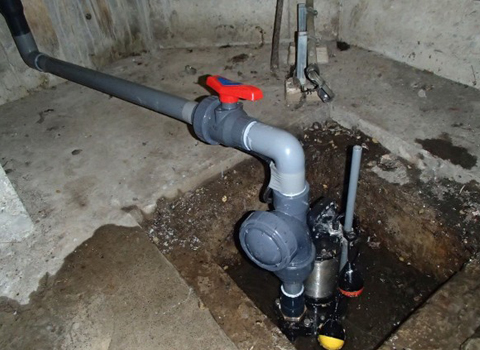
The timing for drainpipe renewal varies greatly depending on the pipe type, installation conditions, and usage environment. It is difficult to make a uniform judgment based only on age, so it is important to consider renewal comprehensively based on regular internal pipe diagnostics (such as endoscopic inspections) and long-term repair plans. Depending on the degree of deterioration, extending service life through lining work (coating repair of the inner pipe surface) may also be an option instead of full renewal.
Renewal Guidelines for Pumps and Other Equipment
| Equipment Type | Estimated Renewal Timing | Notes |
|---|---|---|
| Water supply pump unit (lift pump) |
Approx. 10-15 years | Service life can also be extended by replacing consumable parts |
| Water supply pump unit (booster pump) |
Approx. 10 years | Used in buildings with a direct booster water supply system |
| Drainage pump | Approx. around 10 to 15 years | Varies greatly depending on usage environment |
| Automatic faucets and plumbing fixtures | Approx. 10-20 years | Consider upgrading to energy-saving or touchless models |
It is important to view the timing of equipment renewal not as “replacing it because it broke,” but as an investment to maintain and improve asset value. In recent years, demand has also been increasing for renewals that emphasize energy savings and hygiene, such as switching to sensor-operated automatic faucets and water-saving fixtures.
Systematic Maintenance and Management Protects Facility Asset Value
By detecting abnormalities early through daily inspections and combining systematic maintenance with equipment renewal at the appropriate time, it is possible to reduce sudden repair costs while providing users with peace of mind.
Please check the service area page for details on the areas we serve.
Service List
Renovation Facility Renovation Work
Water Supply and Drainage Pipe Replacement and Rehabilitation
Water Supply System Conversions and Pump Replacement
Water Storage Tank Renewal and Repair, and More
Inspection Various Inspection Services for Apartments and Buildings
Plumbing System Inspections
Statutory Inspections, Including Building Water Tank System Inspections
Common-Area Equipment Inspections
