
Column Private Water Meter Replacement
- TOP
- Useful Information
- Private Water Meter Replacement
- When Should Water Meters Be Replaced? Basic Knowledge and Validity Periods
2025.04.04
When Should Water Meters Be Replaced? Basic Knowledge and Validity Periods
Contents
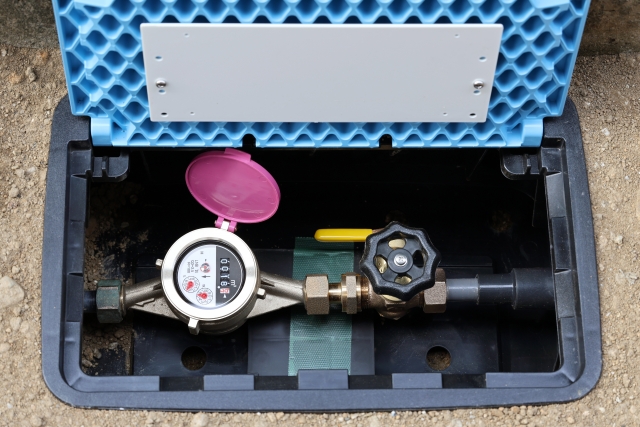
This article is a must-read for anyone who wants to learn more about basic water meter knowledge and validity periods. It explains basic information about water meters, the difference between public and private water meters, and how to check the validity period. It also provides information on the risks of violating replacement obligations and how to identify dishonest contractors.
asic Knowledge of Water Meters
A water meter is a device used to accurately measure the amount of water used in homes and facilities. It plays an essential role in calculating water charges and managing water resources.
Types of Water Meters
Water meters are broadly divided into two types: public water meters and private water meters.
| Type | Features | Installation Location |
|
Public Water Meter (Main Meter) |
|
Installed at the entrance to each home or facility, or within the premises |
|
Private Water Meter (Sub-meter) |
|
Installed inside a facility or in individual locations |
Difference Between Public and Private Water Meters
There are two types of water meters: public water meters and private water meters. They differ in terms of who installs and manages them, who bears the cost, and the purpose of use.
What Is a Public Water Meter?
A public water meter is a water meter installed and managed by a water supplier. It is installed in locations where water service is widely provided, such as ordinary homes and public facilities. Public water meters are operated as part of public water supply infrastructure, and the waterworks bureau is primarily responsible for calculating water charges and maintaining them.
What Is a Private Water Meter?
A private water meter is a water meter installed by an individual owner, such as the owner of a building. It is used in specific applications or facilities to meet needs that cannot be fully addressed by a public water meter.
Advantages and Disadvantages of Public Water Meters
The main advantage of a public water meter is that it can be centrally managed by the water supplier. This reduces the burden of maintenance and can be expected to support a stable water supply. While it is suitable for general use, one disadvantage is that it is less flexible for special water uses (such as factories, agriculture, and cooling-water systems) or customization.
Advantages and Disadvantages of Private Water Meters
The advantage of a private water meter is that the installer can customize it freely. It enables precise measurement and special water quality management tailored to specific purposes, allowing flexible operation. It also makes it possible to accurately understand the water usage of each room or tenant, so charges can be billed more fairly based on actual usage rather than a flat fee, helping prevent complaints or disputes among occupants.
Disadvantages include the risk of disputes if the private water meter is not a legal measuring instrument and accurate billing cannot be made to occupants, as well as the time and cost required for maintenance by the manager, such as purchasing and installing meters, conducting periodic inspections, and responding to failures.
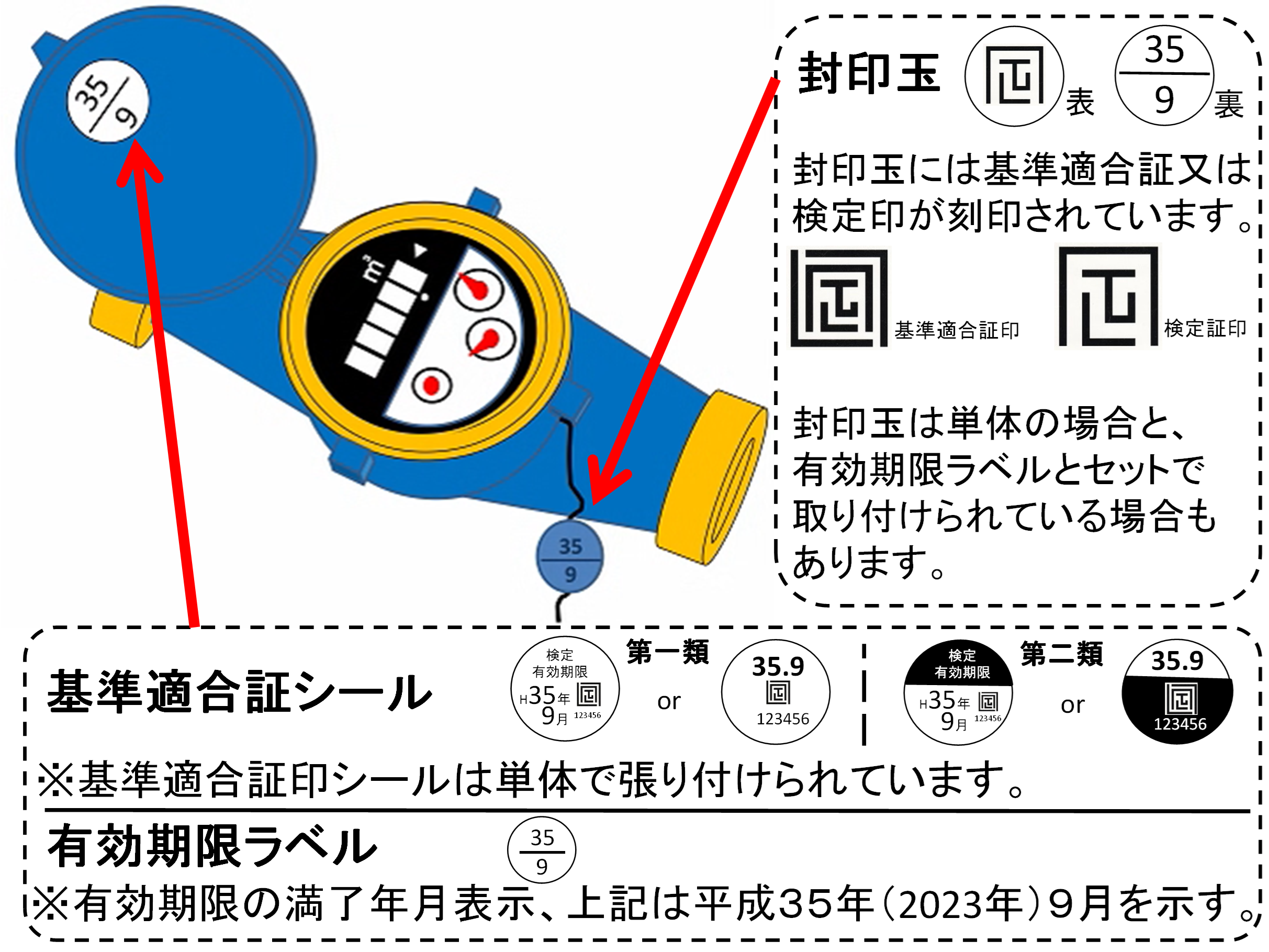
A legal measuring instrument is a measuring device specified by the national government and verified for use in transactions or certification. Examples include water meters, gas meters, and taximeters. Legal measuring instruments bear either a “conformity mark” or a “verification mark,” and periodic verification is required at fixed intervals.
What Is the Validity Period of a Water Meter?
Water meters are installed to accurately measure water usage, and their validity period (verification validity period) is specified under Japan’s Measurement Act. Once the validity period is reached, the accuracy of the meter may decline, so a meter with a valid verification mark must be used.
tandard Validity Period for Water Meters
The validity period of a water meter is eight years.
How to Check the Validity Period
Water meters have a set validity period, and the meter must be replaced within that period.
The validity period of the meter is indicated on the sticker attached to the inside of the meter lid or on the seal attached to the meter.
Penalties for Continuing to Use a Meter After Its Validity Period Has Expired
If you continue to use an expired water meter, the following risks may arise.
Legal penalties (Article 172 of Japan’s Measurement Act)
- Under Article 172 of Japan’s Measurement Act, a person may be punished by imprisonment for up to six months, a fine of up to 500,000 yen, or both.
Financial risk
- Due to deterioration in meter performance, the amount that the manager pays to the water supplier (waterworks bureau) may become higher than the water charges collected from residents.
Who Performs Water Meter Replacement Work?
| Public Water Meter | Private Water Meter | |
| Installation, management, and replacement | Water supplier (local government / waterworks bureau) | Building owner, management company, etc. |
| Cost | Free (no replacement cost is incurred by each household, etc.) | Borne by the manager |
| The water supplier automatically performs replacement within the validity period |
Voluntary management and replacement are required. Failure to replace the meter within the validity period may result in legal and financial risks |
Beware of Dishonest Contractors Pretending to Be the Waterworks Bureau
When seeking information about the timing or procedures for water meter replacement, you may encounter a contractor who appears trustworthy at first glance.
However, there are dishonest contractors who pretend to be the waterworks bureau or use water meter replacement as a pretext to make fraudulent charges or perform poor-quality work, and there have been reported cases in which they demand high fees.
Common methods
- Pretending to be a waterworks bureau employee and demanding a high fee by saying, “There was a problem with your water meter, so we repaired it. Please pay the repair fee.”
- Pretending to be a waterworks bureau employee and visiting to demand water charges by saying, “I came to collect your water bill.”
- Creating anxiety by saying, “If it has expired, you will be fined! Replacement work is needed immediately.”
- Providing an unusually high estimate
- Installing a meter that is not a legal measuring instrument
- Operating as a business without public qualifications or registration
Tips to Avoid Falling Victim to Fraud
- Check the official website and telephone number: Make sure to contact the waterworks bureau based on official information.
- Check identification: Waterworks bureau employees and subcontractors always carry identification. When someone visits, ask them to show their ID.
- Do not respond to suspicious contacts: Be cautious about sudden calls or visits, and it is important to confirm directly with the waterworks bureau.
- Obtain estimates from multiple businesses and always receive a contract and receipt: Request formal documents for every transaction.
- Seek a third-party opinion: If you are unsure, consult the waterworks bureau service center, a consumer affairs center, or the police.
Summary
This article provided a detailed explanation of water meter replacement.
Replacing water meters is important for ensuring accurate water charge calculations and safe water use. By checking the validity period regularly and replacing the meter within the period, unnecessary costs and problems can be prevented. Choosing a reliable contractor is key to keeping replacement costs down. However, be very careful of dishonest contractors and proceed with replacement safely. Please use this article as a reference and check the validity period of your water meter.
