
Column Plumbing System Inspection
- TOP
- Useful Information
- Plumbing System Inspection
- What Is Fire Safety Equipment Inspection for Apartment Buildings? Inspection Details, Frequency, Penalties for Violations, and More
2025.05.26
What Is Fire Safety Equipment Inspection for Apartment Buildings? Inspection Details, Frequency, Penalties for Violations, and More
Contents
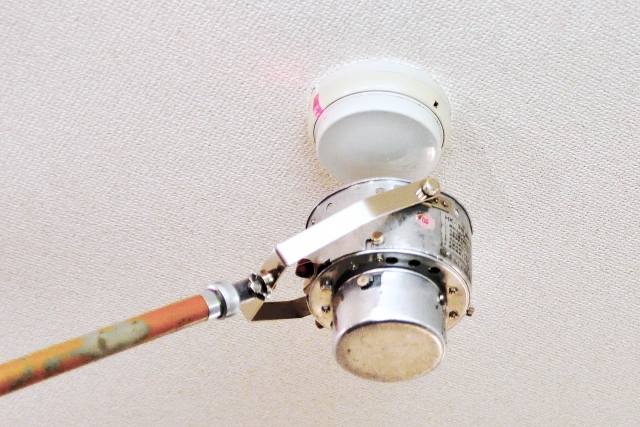
For people who live in or manage apartment buildings, fire safety equipment inspection is an essential task for protecting daily life and safety. However, few people may be familiar with the specific inspection details and frequency, or with the penalties for failing to conduct inspections. This article provides a thorough explanation of fire safety equipment inspections for apartment buildings.
What Is Fire Safety Equipment Inspection for Apartment Buildings?
Fire safety equipment inspection for apartment buildings is an inspection carried out to ensure the proper management and maintenance of fire safety equipment in order to protect residents. It is extremely important for creating conditions that allow a quick response in the event of a fire.
Because apartment buildings are used by many people as places to live, a fire can create a risk of serious damage once it occurs. For that reason, conducting regular inspections of fire safety equipment is directly connected to the protection of life and property.
Proper fire safety equipment inspection also offers benefits such as meeting the requirements for fire insurance coverage and enabling a smoother response if damage occurs. To live with peace of mind, it is important to fully recognize the importance of fire safety equipment inspection.
Types of Fire Safety Equipment Inspections and Inspection Cycles
There are two types of fire safety equipment inspections, as follows.
- Equipment inspection: Conducted once every six months. This inspection checks the exterior condition of the equipment and verifies functions through simple operation.
- Comprehensive inspection: Conducted once a year. This inspection actually operates the equipment and comprehensively verifies its functions.
Scope and Coverage of Fire Safety Equipment Inspections for Apartment Buildings
Conditions for Buildings Subject to Inspection
The conditions under which fire safety equipment inspections are required for apartment buildings are clearly stipulated by law. Under Article 17-3-3 of Japan's Fire Service Act, the buildings for which fire safety equipment inspections are mandatory are as follows.
1. Specified fire prevention properties (total floor area of 1,000 m² or more)
This category applies to facilities used by an unspecified large number of people. Examples include theaters, movie theaters, nightclubs, restaurants, inns, hotels, hospitals, and nursing homes. In these buildings, equipment inspections every six months and comprehensive inspections once a year are required, and the inspection results must be reported to the competent fire station once a year.
2. Non-specified fire prevention properties (total floor area of 1,000 m² or more and designated by the fire chief or fire station chief)
Even buildings that do not fall under the category of specified fire prevention properties require inspections if they have a total floor area of 1,000 m² or more and are designated by the fire chief or fire station chief. Examples include apartment buildings, schools, libraries, museums, art museums, shrines, temples, and factories. In these buildings, equipment inspections every six months and comprehensive inspections once a year are required, and the inspection results must be reported to the competent fire station once every three years.
3. Specified one-staircase fire prevention properties
This category applies to buildings with only one indoor staircase and with portions used for specified purposes (for example, restaurants or retail stores) on floors other than the first or second floor. Because escape routes are limited, these buildings present a high level of danger in the event of a fire and require strict inspections.
4. Fire prevention properties equipped with total flooding inert gas fire extinguishing systems that use carbon dioxide as the extinguishing agent
Under Article 31-6 of the Regulation for Enforcement of Japan's Fire Service Act, owners, managers, and similar persons responsible for fire prevention properties equipped with gas-based fire extinguishing systems, such as carbon dioxide fire extinguishing systems and Halon 1301 fire extinguishing systems, are obligated to conduct inspections once every year and report the results. The building's use or floor area is irrelevant. Strict management is required because accidental activation can have a serious impact on human life.
Equipment Requiring Inspection
In fire safety equipment inspections, it is necessary to confirm that the fire prevention and fire extinguishing equipment installed in the apartment building complies with the relevant standards.
Fire Extinguishing Equipment
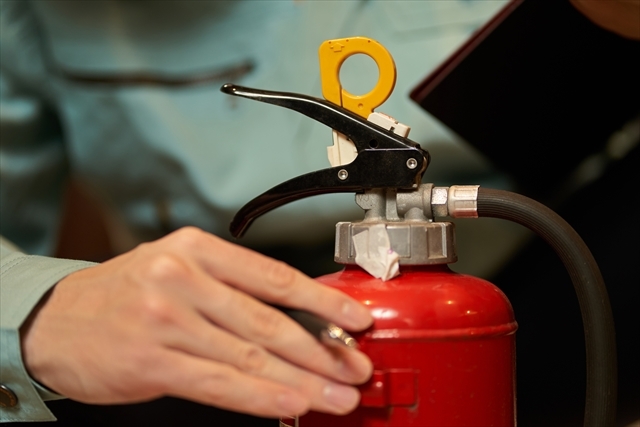
This equipment is used for initial firefighting when a fire breaks out. During inspection, the inspector checks whether the fire extinguisher body has damage or rust, whether the extinguishing agent is within its expiration date, and whether the pressure gauge needle is within the normal range. It is also important to check whether the installation location is easily accessible.
- Fire extinguishers: The most common fire extinguishing equipment, installed on each floor and in common areas.
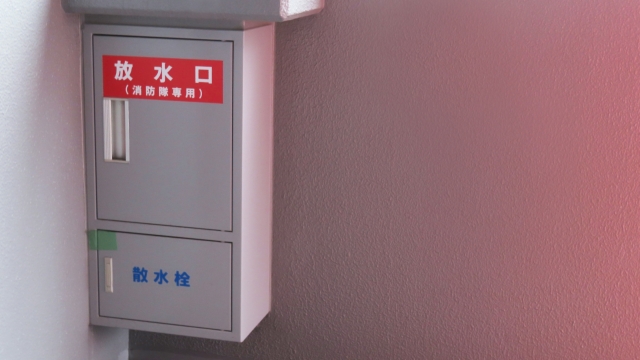
- Indoor fire hydrant systems: Fire hydrants installed inside the building and used for firefighting activities.
- Sprinkler systems: Systems that automatically spray water and extinguish fires when a fire is detected.
- Water spray fire extinguishing systems: Systems that discharge water in a mist form to suppress fires.
- Foam fire extinguishing systems: Systems that discharge foam to extinguish fires.
- Inert gas fire extinguishing systems: Systems that extinguish fires by removing oxygen.
- Halogenated agent fire extinguishing systems: Systems that use halon gas to extinguish fires.
- Dry chemical fire extinguishing systems: Systems that discharge powder to extinguish fires.
Alarm Equipment
This equipment detects fires early and issues alarms. The condition of detectors and control panels installed on each floor and in each room is checked in detail, and wiring and connections are also checked for defects. It is also necessary to test whether alarms operate properly.
- Automatic fire alarm systems: Systems that detect smoke or heat and automatically issue an alarm.
- Gas leak fire alarm systems: Systems that detect gas leaks and issue an alarm.
- Ground-fault fire alarms: Devices that detect the risk of fire caused by electrical leakage and issue an alarm.
- Emergency alarm devices and systems: Equipment such as emergency bells and sirens that issue alarms manually or automatically.
Evacuation Equipment
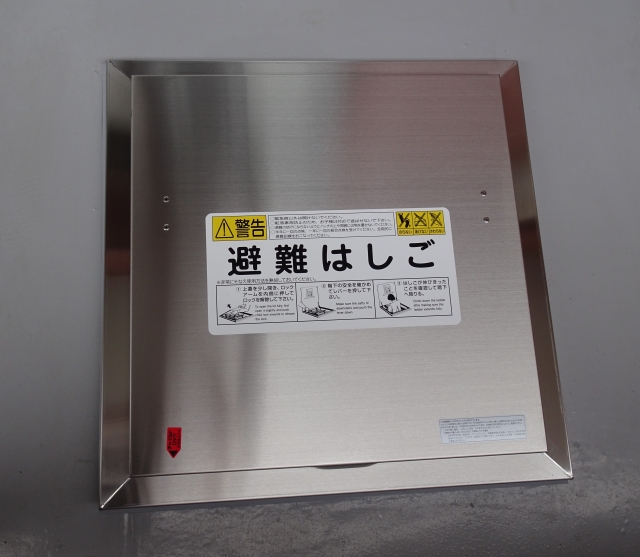
This equipment enables safe evacuation in the event of a fire. Inspection work includes confirming that evacuation ladders suited to the structure of the apartment building are properly installed and checking that evacuation devices are not damaged.
- Evacuation devices: Devices that assist evacuation, such as evacuation ladders, rescue chutes, and descent devices.
- Exit lights and evacuation signs: Lights and signs that indicate evacuation routes and emergency exits.
Equipment Required for Firefighting Activities
This equipment is required when fire crews conduct firefighting activities.
- Smoke exhaust systems: Systems that exhaust smoke and secure visibility.
- Fire department connection pipes: Piping used to supply water from fire engines.
- Emergency power outlet systems: Power supply equipment for use by fire crews.
- Auxiliary wireless communication systems: Equipment that supports fire crew communications.
- Firefighting water sources (fire protection water tanks, firefighting wells, etc.)
Flow of Fire Safety Equipment Inspection
To properly conduct fire safety equipment inspections for apartment buildings, it is important to clearly understand the process from requesting an inspection to reporting the results and, when necessary, carrying out renovation work.
Request
The first step in starting a fire safety equipment inspection is to request an inspection from a specialized service provider. Under the law, inspection by a specialist who is qualified as a fire protection engineer or as a certified fire equipment inspector is required.
Inspection
Next, the actual inspection work is carried out. The inspection is conducted by classifying it into two types: functional inspection and comprehensive inspection.
Report
After the inspection is completed, the service provider submits a report. This report describes the inspection details, results, and any recommended improvements in detail. The report is also used for periodic reporting to the fire station and is an important document for fulfilling reporting obligations required by law.
Renovation Work
Based on the inspection results, renovation work is required if problems with the equipment are found. During renovation work, the work proceeds mainly on the defective items described in the report. This work must be planned carefully so that it does not interfere with residents' daily lives.
The above is the process from “request” to “inspection,” “report,” and “renovation work.”
Penalties for Failing to Conduct Fire Safety Equipment Inspections
Fire safety equipment inspections in apartment buildings are a strict obligation based on laws and regulations, and various penalties may be imposed if this obligation is neglected.
Violation of an Installation Order for Fire Safety Equipment
Fire safety equipment must be installed according to the type and scale of the building. Failure to fulfill this obligation constitutes a “violation of an installation order.” A violation of an installation order for fire safety equipment is punishable by imprisonment for up to one year or a fine of up to 1,000,000 yen.
Violation of the Inspection Reporting Obligation
Failure to report the results of a fire safety equipment inspection, or submitting a false report, also constitutes a violation of the inspection reporting obligation and is punishable by a fine of up to 300,000 yen or penal detention. Cases in which the inspection itself has not been conducted, or the rules regarding inspection intervals have not been followed, may also constitute a violation of the inspection reporting obligation.
Summary
This article introduced fire safety equipment inspections for apartment buildings.
Fire safety equipment inspection for apartment buildings is an obligation based on law and is an extremely important procedure for protecting residents’ safety. Equipment such as automatic fire alarm systems, fire extinguishers, and evacuation devices must be checked regularly to confirm that they function properly. Equipment inspections are required every six months, comprehensive inspections are required once a year, and the inspection results must be reported to the competent fire station once every three years.
Failure to do so may result in penalties for violating Japan’s Fire Service Act, and in the worst case it may create a risk of loss of life or property. Apartment building owners and managers are responsible for hiring an appropriate service provider and ensuring that inspections are reliably conducted. Please use this article as a reference and consider reviewing fire safety equipment inspections for your apartment building.
