
Column Plumbing System Inspection
- TOP
- Useful Information
- Plumbing System Inspection
- Must-Know Information: Why Are Inspections of Plumbing Systems Necessary?
2024.10.17
Must-Know Information: Why Are Inspections of Plumbing Systems Necessary?
Contents
Are you properly inspecting your plumbing systems? In this article, we explain why inspections of plumbing systems are necessary. Inspections are intended to prevent failures, abnormalities, and other problems before they occur. By keeping plumbing systems in normal condition, inspections also help extend their service life. Because these systems are part of the lifelines essential to daily life, they should be inspected regularly in preparation for unexpected issues.
What Are Plumbing Systems?
This is a collective term for water supply systems, which supply tap water used for drinking and other purposes, and drainage systems, which discharge wastewater such as domestic wastewater, sewage, and spring water. Plumbing systems play an important role in protecting the safety of water, which is essential for healthy human life.
An inspection of plumbing systems is an important maintenance task that regularly checks the functions of the water supply systems and drainage systems we use every day, and helps maintain their proper operation.
Components of Plumbing Systems
Plumbing systems are made up of various facilities, including water pipes, drainpipes, water storage tanks, and various water supply pumps. Only when each piece of equipment functions properly can water be supplied efficiently and wastewater be treated appropriately.
The main components of plumbing systems are introduced below.
- Water pipes: Basic infrastructure and piping used to supply safe and hygienic water.
- Drainpipes: Piping used to safely discharge used water and release it smoothly to the outside.
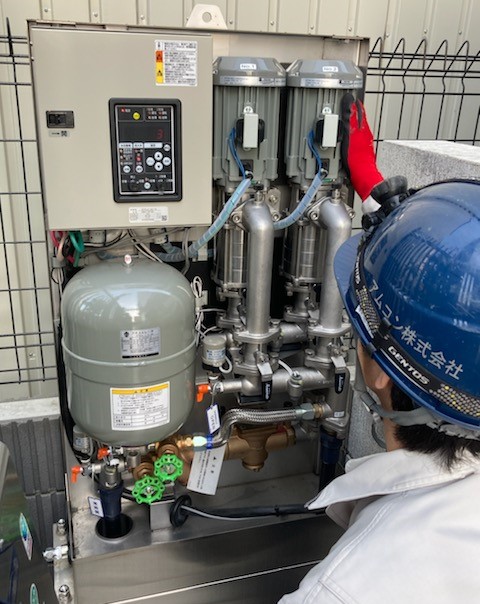
- Water supply pumps: Equipment that sends tap water into water supply pipes using pressurized water supply pumps or lifting pumps.
- Drainage pumps: Equipment that sends dirty water (sewage) into drainpipes for discharge.
- Valves: Components used to adjust the flow of water and control the flow rate, including shutting off fluids as needed.
- Drain traps: Components or mechanisms that prevent foul odors from drainage and the entry of pests.
Why Inspections of Plumbing Systems Are Necessary
Plumbing systems are part of the lifelines essential to daily life.
If regular inspections are neglected, unexpected problems such as water outages or leaks may occur and interfere with daily life. Proper inspections help prevent failures, abnormalities, and problems before they occur. By maintaining plumbing systems in normal condition, inspections also help extend the service life of the equipment.
Timing for Regular Inspections of Plumbing Systems
Inspections of plumbing systems are generally recommended about twice a year. In particular, for older buildings or buildings where leaks or other abnormalities have occurred in the past, increasing the number of inspections is recommended.
Benefits of Plumbing Systems Inspection
Inspections of plumbing systems are a very important point for maintaining a comfortable living environment.
The specific benefits are explained below in detail.
1. Early detection and repair of abnormalities
By conducting regular inspections, small defects and deterioration can be detected early and addressed before they develop into major problems. This helps prevent situations that require emergency response, such as water outages.
2. Longer service life
Proper inspection and maintenance can extend the service life of plumbing systems. By addressing problems that occur in the equipment at an early stage, deterioration can be prevented, ultimately helping reduce costs.
3. Improved asset value
Regular inspections of plumbing systems in houses and buildings are also effective for maintaining or improving the asset value of the property. Properly maintained equipment is a strong appeal point for prospective buyers and tenants.
Maintenance Methods for Plumbing Systems
Maintenance of plumbing systems is an important measure for preventing problems before they occur.
Simple Maintenance Methods You Can Do Yourself
There are also simple maintenance tasks that can be performed at home as part of daily care.
These mainly include the following four methods.
・Frequent pipe checks: Visually check the piping for abnormalities, and respond promptly if you find rust, distortion, water leakage, or other abnormalities.
・Checking for water leaks: Regularly check each valve and joint for water leakage.
・Cleaning drain openings: Clean them regularly so that trash, hair, and other debris do not clog the drain traps.
・Removing dirt from drain openings: Use commercially available cleaners, baking soda, vinegar, or similar products to remove dirt from drain openings and prevent drainpipes from clogging.
Benefits of Maintenance by Specialized Contractors
Maintenance by specialized contractors includes technical work that is difficult for ordinary households to perform.
For example, at AMCON:
1. One-stop support
We provide one-stop support, from periodic inspections to investigation, diagnosis, renovation work, maintenance, and daily emergency response when defects occur.
2. Advanced technical capabilities
Our group of specialists, with extensive experience, provides accurate responses tailored to your needs. Please feel free to consult us with confidence about anything from small concerns to major problems.
3. Peace of mind
Our employees, who have received thorough safety education and business etiquette training, will handle the work, helping reduce the risk of various problems occurring at each site.
Are Inspections of Plumbing Systems Mandatory?
Whether inspections of plumbing systems are mandatory depends on the relevant laws and regulations. Understanding these laws and regulations is very important for carrying out proper maintenance.
In Tokyo, for example, local government ordinances in Japan may impose their own inspection obligations, such as requiring inspection of booster water supply pumps for the direct booster water supply system used in condominiums and buildings at least once a year.
Inspection Standards for Condominiums and Buildings
| Inspection Item | Details | Frequency |
| Pipe corrosion | Visual and tactile check | Once a year |
| Pump operating status | Performance check using measuring instruments | Twice a year |
| Drainage backflow | Flow check using test water | Once every six months |
For large-scale buildings, regular inspections in accordance with guidelines issued by Japan's Ministry of Land, Infrastructure, Transport and Tourism are recommended.
Inspection Standards for Specified Buildings
Specified buildings include, for example, offices and restaurants with a total floor area of 3,000 square meters or more, and hotels and inns with 100 or more guest rooms.
Under Japan's Building Sanitation Law (Act on Maintenance of Sanitation in Buildings), specified buildings are required to undergo regular inspection and cleaning of plumbing systems, including the following inspection items.
- Inspection and cleaning of water supply tanks and water supply pipes
- Inspection and cleaning of drainage facilities
- Cleaning of water storage tanks (at least once a year)
Inspection Costs for Plumbing Systems
The inspection cost for drainage facilities is determined by the inspection details required for each property. It varies depending on the scale and type of equipment, the inspection frequency and method, and the region. The general cost of an inspection of plumbing systems is 10,000 to 30,000 yen per inspection for condominiums and buildings. As a cost-saving measure, entering into a regular maintenance contract may be more economical than arranging one-time inspections.
Conclusion
In this article, we introduced why inspections of plumbing systems are necessary.
Inspections of plumbing systems are essential for daily life and business operations. By conducting inspections regularly, failures, abnormalities, and problems with equipment can be prevented before they occur, helping maintain a safe and comfortable living environment.
Just imagine for a moment: what would happen if the water that normally flows as a matter of course in your daily life suddenly stopped?
For the safety of water, which is indispensable to daily life, please consider inspections of plumbing systems using this article as a reference.
